Cervical cancer occurs in the cells of the cervix—the lower part of the uterus that connects
to the vagina. Various strains of the Human Papillomavirus (HPV), a sexually transmitted
infection, play a role in causing most cervical cancer.
The most important thing to know: Cervical cancer is highly preventable with regular
screening and the HPV vaccine.
When caught in the pre-cancerous
stage, treatment is nearly 100%
successful.
Almost all cervical cancers are caused
by persistent HPV infections.
What is cancer?
Cancer is what happens when your body’s cells grow in an uncontrollable way and damages healthy parts.
What is cervical cancer?
Cervical cancer starts in the cells lining the cervix - the lower part of the uterus (womb). This is sometimes called the uterine cervix. The fetus grows in the body of the uterus (the upper part). The cervix connects the body of the uterus to the vagina (birth canal).
Why is cervical cancer awareness important?
Cervical cancer can often be prevented through vaccination, regular screening, and timely follow-up care. When found early, it is highly curable.
Who gets cervical cancer?
According to the World Health Organization (WHO), in 2022, cervical cancer was the fourth most common cancer in women, globally.In the United States, cervical cancer is frequently found in women between the ages of 35 and 44 with the average age at diagnosis being 50. Hispanic women are most likely to get cervical cancer, but African-American women are most likely to die from cervical cancer.
Why does this matter?
This reinforces the importance of prevention, routine screening, and follow-up care, especially for communities facing higher risk or worse outcomes.
What is the most important risk factor for cervical cancer?
Human Papillomavirus (HPV)
HPV is the most important risk factor for cervical cancer. It can spread from one person to another during skin-to-skin contact. One way the virus spreads is through sexual activity, including vaginal, anal, and even oral sex.
What other factors can increase risk?
How is cervical cancer detected?
Why is regular screening still important if someone gets the HPV vaccine?
When should routine Pap smears begin?
How often should screening happen between ages 21 and 29?
How often should screening happen between ages 30 and 65?
Is a Pelvic Exam the same thing as a Pap Smear?
What does a normal result mean?
What does an abnormal result mean?
Why is follow-up important?
How can HPV risk be reduced?
Is prevention still important even with screening?
Does the HPV vaccine prevent cervical cancer?
When should someone get the HPV vaccine?
What ages are routinely recommended for vaccination?
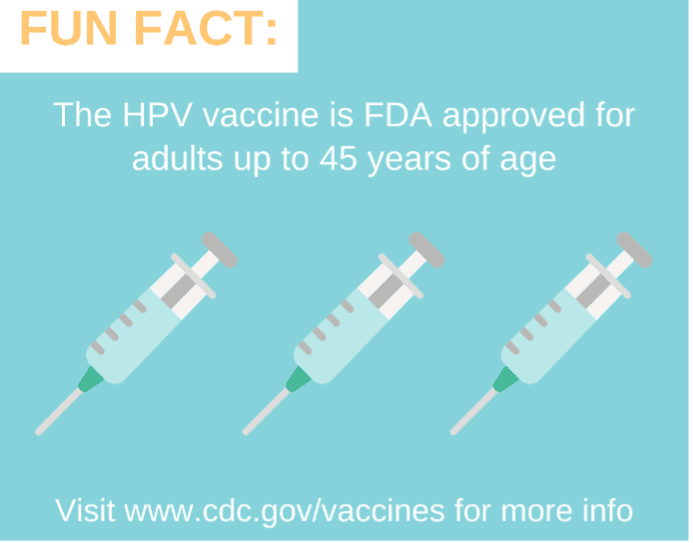
It is routinely recommended for girls and boys ages 11 or 12, although it can be given as early as age 9. The Centers for Disease Control and Prevention (CDC) now recommends that all 11- and 12-year-olds receive two doses of HPV vaccine at least six months apart. Teens and young adults who begin the vaccine series later, at ages 15 through 26, should continue to receive three doses of the vaccine. The CDC now recommends catch-up HPV vaccinations for all people through age 26 who aren’t adequately vaccinated. Some adults between the ages of 27 and 45 who are not already vaccinated may decide to get the HPV vaccine after talking with their doctor about their risk of new HPV infections.